Prime cost for restaurants: formula, meaning, and weekly tracking.
Prime cost is one of the most important restaurant performance numbers because it combines the two largest controllable costs: food and labour.
Restaurant prime cost = food and beverage cost + labour cost, usually measured as a percentage of sales.
What is prime cost in a restaurant?
Prime cost is the combined cost of goods sold and labour. In restaurants, cost of goods sold usually starts with food and beverage purchases, adjusted by inventory. Labour cost usually includes hourly wages and, depending on the operator's reporting policy, salaried management.
Operators watch prime cost because it shows whether the restaurant's core operating model is working. Rent, insurance, repairs, and marketing matter too, but food and labour are the biggest numbers operators can usually affect week to week.
Prime cost formula
The common restaurant prime cost percentage formula is:
(Food and beverage cost + labour cost) / total sales
Some restaurants use net sales as the denominator. The important thing is consistency: use the same sales basis every week so the trend is meaningful.
What moves prime cost?
- Vendor price increases on key food or beverage items.
- Changes in sales mix, such as lower-margin menu items selling more often.
- Overstaffing, overtime, or schedule mismatch against sales volume.
- Inventory timing, waste, spoilage, or missing counts.
- Unreviewed credits, deposits, discounts, or invoice errors.
Why weekly tracking matters
A monthly prime cost report is useful for accounting, but it is often too late for operations. Weekly tracking lets operators see whether the current week is drifting before another schedule, order, or menu decision is made.
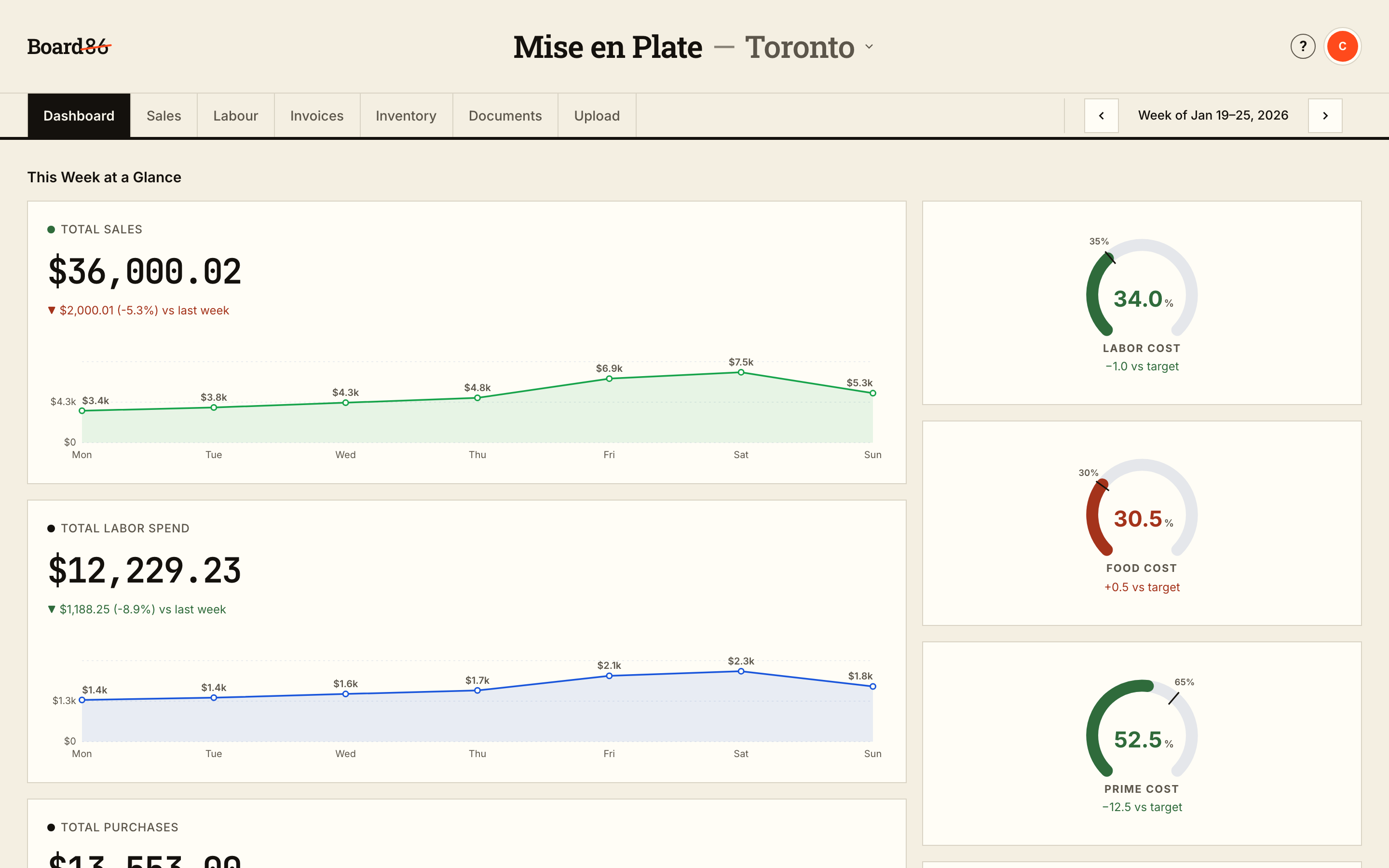
Board86 tracks prime cost by combining confirmed invoices, POS sales reports, labour exports, inventory counts, and operator-set targets into one weekly dashboard.
Track prime cost from the source documents.
Board86 turns invoices, labour, and sales into the weekly read.